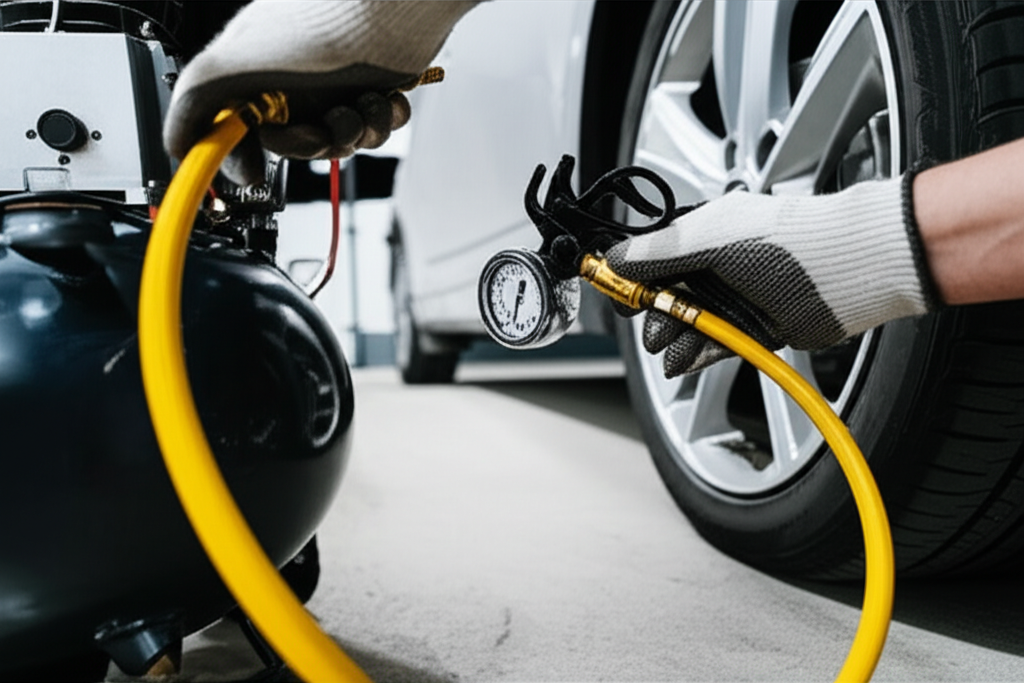
CFM in an air compressor measures the volume of air it can deliver per minute. It’s crucial for matching the compressor to your tools, ensuring they run efficiently and safely. Understanding CFM helps you select the right compressor, preventing frustration and costly mistakes.
Navigating the world of air compressors can sometimes feel like deciphering a secret code, can’t it? You’re probably looking to power up a new tool, finally get around to painting that fence, or maybe just inflate your car tires with ease. But then you see all these numbers and acronyms, and one that pops up everywhere is “CFM.” What exactly does it mean, and why is it so important for your DIY projects? It’s a common question, and honestly, it’s one of the most fundamental things to understand when choosing an air compressor. Don’t worry, though! We’re going to break it down in a way that makes perfect sense, so you can confidently pick the right compressor for your needs. By the end of this guide, you’ll know precisely what CFM is and how to use it to your advantage.
Understanding CFM: The Heartbeat of Your Air Compressor
So, let’s dive into what CFM actually stands for and why it’s the key metric for air compressor performance. CFM is short for Cubic Feet per Minute. Think of it as the volume of air your compressor can supply in one minute. It’s not about how fast the air comes out (that’s usually measured in PSI, or pounds per square inch, which we’ll touch on later), but rather the quantity of air available to do work.
Why is this volume so important? Because every air-powered tool has specific air requirements to operate effectively. If your compressor can’t deliver enough air volume (CFM), your tools won’t perform as they should. They might run weakly, sputter, or simply not work at all. This is where understanding CFM becomes essential for making the right choice.
CFM vs. PSI: Knowing the Difference
Before we go too deep into CFM, it’s helpful to quickly clarify its relationship with PSI. You’ll see both numbers advertised for air compressors, and they represent different things:
- PSI (Pounds per Square Inch): This measures the pressure of the air. Think of it like the force or ‘push’ behind the air. Many tools require a certain PSI to operate correctly.
- CFM (Cubic Feet per Minute): This measures the volume or flow rate of the air. This is the amount of air the compressor can supply over time.
Imagine a garden hose. PSI is like the water pressure coming out of the nozzle – how hard it sprays. CFM is like how much water is flowing through the hose in total. You need both the right pressure and the right flow rate for your tools to work beautifully.
Most tools will specify their requirements in both PSI and CFM. For example, a nail gun might need 90 PSI, but it also needs a certain CFM to drive nails consistently. Your compressor needs to meet both specifications.
Why CFM Matters for Your Tools
Every air-powered tool has a “duty cycle” and an air consumption rate. The duty cycle refers to how often the tool needs air, and the consumption rate is how much air it uses when it’s running. Some tools, like impact wrenches or sanders, use a lot of air continuously. Others, like a brad nailer, use air in short bursts.
Here’s a simple way to think about it:
- Low CFM Tools: Things like tire inflators, airbrushes, or small brad nailers often don’t require a huge amount of air. A smaller compressor might handle these just fine.
- Medium CFM Tools: Ratchets, spray guns (for light painting), and staplers typically need a bit more air volume.
- High CFM Tools: Sanders, impact wrenches, grinders, and larger spray guns used for automotive painting or house painting demand a significant amount of air to operate at their best.
If your compressor’s CFM output is lower than what your tool requires, the tool will likely perform poorly. For instance, a sander might bog down, or a spray gun might produce a weak, inconsistent finish. You might also find the compressor’s motor running constantly, overheating, and wearing out faster because it’s struggling to keep up.
How to Find Your Tool’s CFM Requirements
This is a vital step in selecting the right compressor. Where do you find this information? It’s usually readily available:
- Tool Manuals: The most reliable place to find the air requirements for your specific tool is in its owner’s manual. Look for sections on specifications or operating requirements.
- Tool Manufacturer Websites: If you don’t have the manual, check the manufacturer’s website. They usually have product specifications listed.
- Tool Packaging: Sometimes, the box the tool came in will list the necessary CFM and PSI.
- Online Retailer Listings: When browsing for tools online, the product description almost always includes the required CFM and PSI.
When you find the CFM requirement, pay attention to the PSI it’s listed at. For example, a tool might say “4.0 CFM @ 90 PSI.” This means it needs 4 cubic feet of air per minute when operating at a pressure of 90 pounds per square inch.
Calculating Your Compressor’s CFM Needs
This is where we put it all together. To ensure your compressor can handle your tools, you need to choose one that outputs more CFM than your most demanding tool. Why more? Because compressors rarely operate at their absolute peak efficiency continuously, and you want a little buffer.
A good rule of thumb is to add about 30-50% to the CFM requirement of your most air-hungry tool. This buffer accounts for:
- Continuous Use: If you plan to use a tool for an extended period, the compressor needs to keep up without straining.
- Efficiency Loss: Over time, components can wear, and hoses can cause minor pressure drops.
- Future Tools: You might buy more powerful tools later, and having a bit of extra capacity means your compressor can still handle them.
- Simultaneous Use: If you plan to run multiple air tools at once (though this is less common for DIYers), you’ll need to add their CFM requirements together.
Example Calculation
Let’s say your most demanding tool is an orbital sander that requires 6 CFM @ 90 PSI.
- Tool Requirement: 6 CFM @ 90 PSI
- Add Buffer (e.g., 50%): 6 CFM 1.50 = 9 CFM
In this scenario, you’d want to look for an air compressor that can deliver at least 9 CFM at 90 PSI. This ensures your sander will have plenty of air to work smoothly and efficiently.
Where CFM is Measured: SCFM vs. ACFM
You might also encounter two different ways CFM is measured: SCFM and ACFM. This can be a bit confusing, but it’s important to know what they mean:
- SCFM (Standard Cubic Feet per Minute): This is the most common and standardized way to measure airflow. It’s measured under specific, standard conditions: 68°F (20°C), 14.7 PSI (atmospheric pressure), and 36% relative humidity. Manufacturers usually advertise SCFM because it provides a consistent benchmark for comparison.
- ACFM (Actual Cubic Feet per Minute): This measures the air volume under the actual operating conditions, which can vary greatly in temperature and pressure. ACFM is generally higher than SCFM because warmer, less dense air takes up more volume.
Why does this matter? When comparing compressors, always look for SCFM ratings, especially at a specific PSI (like 90 PSI), as this is the industry standard and the most useful for matching tools. If a manufacturer only lists ACFM, be cautious, as it might be an inflated number.
For most DIY applications and tool matching, you’ll be working with SCFM @ 90 PSI. This is the number you should focus on.
Types of Air Compressors and Their CFM Output
The type of air compressor you choose will significantly impact its CFM output. Here’s a quick look:
1. Hot Dog Compressors
These are typically small, portable, single-stage compressors. They are great for light-duty tasks like inflating tires, powering brad nailers, or cleaning with an air blower. Their CFM output is usually quite low, often in the 1-5 CFM range.
2. Pancake Compressors
Similar to hot dogs in portability, pancake compressors have a flat, horizontal tank. They are also suited for light to medium-duty tasks. Their CFM output is generally a bit higher than hot dogs, maybe in the 3-7 CFM range.
3. Twin-Stack Compressors
These often have two smaller tanks connected. They offer a good balance of portability and decent CFM, often suitable for running framing nailers or doing light spray painting. Expect CFM ratings in the 5-10 CFM range.
4. Vertical Tank Compressors
These are larger, stationary units, often found in garages or workshops. They usually have higher CFM outputs, making them suitable for more demanding tools like impact wrenches, grinders, and continuous spray painting. CFM can range from 10 CFM up to 20+ CFM.
5. Two-Stage Compressors
These compressors compress air in two stages, which is more efficient and allows them to reach higher PSI and deliver more consistent CFM, especially under heavy load. They are ideal for industrial use or serious DIYers running multiple high-demand tools. Their CFM ratings are typically higher, starting around 10-15 CFM and going much higher.
Key Takeaway: The bigger and more robust the compressor, the higher its CFM output is likely to be. Match the compressor type to the demands of your typical tasks.
Matching CFM to Common DIY Tasks
To give you a clearer picture, here’s a general guide linking common DIY tasks to their typical CFM requirements at 90 PSI. Remember to always add that buffer!
| Tool/Task | Typical CFM @ 90 PSI | Compressor Type Recommendation |
|---|---|---|
| Tire Inflator | 0.5 – 2 CFM | Hot Dog, Pancake |
| Brad Nailer / Stapler | 0.5 – 2 CFM | Hot Dog, Pancake |
| Finish Nailer | 2 – 3 CFM | Pancake, Twin-Stack |
| Framing Nailer | 2 – 4 CFM | Twin-Stack, Small Vertical |
| Impact Wrench (1/2 inch) | 5 – 7 CFM | Medium Vertical, Twin-Stack (if used lightly) |
| Spray Gun (HVLP for light painting) | 6 – 10 CFM | Medium Vertical, Larger Twin-Stack |
| Orbital Sander | 6 – 10 CFM | Medium to Large Vertical |
| Die Grinder | 4 – 8 CFM | Medium Vertical |
| Automotive Painting (multiple tools) | 10 – 15+ CFM | Large Vertical, Two-Stage |
Important Note: These are approximate values. Always check your specific tool’s requirements. If you plan to use multiple tools simultaneously, you’ll need to sum their CFM requirements and add your buffer.
What Happens If Your Compressor’s CFM is Too Low?
We’ve touched on this, but it’s worth reiterating the consequences of choosing a compressor with insufficient CFM:
- Poor Tool Performance: Tools won’t operate at their intended power or speed. Nail guns might not sink nails fully, sanders will feel sluggish, and spray guns will produce a poor finish.
- Increased Tool Wear: When a tool doesn’t get enough air, its motor or pneumatic components might work harder or cycle improperly, leading to premature wear and tear.
- Compressor Overheating: The compressor motor will run constantly, trying to meet demand, which can lead to overheating, reduced lifespan, and potential damage.
- Frustration and Wasted Time: Your projects will take longer, and the results might be disappointing, leading to a less enjoyable DIY experience.
Tips for Choosing the Right Air Compressor
Now that you’re a CFM expert, here are some practical tips for making your purchase:
- List Your Tools: Make a list of all the air tools you currently own and plan to buy.
- Check CFM Requirements: For each tool, find its CFM requirement at 90 PSI.
- Identify Your Most Demanding Tool: This is the tool that dictates your minimum CFM needs.
- Add Your Buffer: Multiply the most demanding tool’s CFM by 1.3 to 1.5.
- Consider PSI: Ensure the compressor can also meet the PSI needs of your tools. Most compressors offer adjustable PSI output.
- Think About Tank Size: A larger tank (measured in gallons) acts as a buffer, storing more air. This is helpful for tools that use air in bursts, as it means the compressor doesn’t have to cycle on as frequently. However, CFM is still the primary factor for continuous tool operation.
- Portability vs. Stationary: Decide if you need a compressor you can easily move around your property or a larger, more powerful unit that stays in your workshop.
- Oil vs. Oil-Free: Oil-lubricated compressors tend to be quieter and last longer but require more maintenance. Oil-free compressors are lighter, require less maintenance, but can be louder and may not last as long under heavy use.
- Read Reviews: See what other users say about a compressor’s performance and reliability.
Maintaining Your Air Compressor for Longevity
Once you’ve chosen the right compressor, proper maintenance will ensure it serves you well for years. Here are some basics:
- Drain the Tank Regularly: Moisture builds up in the tank. Drain it at the end of each use to prevent rust and corrosion. You’ll find a drain valve at the bottom of the tank. Properly maintained compressors are more energy-efficient.
- Check and Clean Air Filters: A clogged air filter restricts airflow, reducing CFM output and straining the motor. Clean or replace it according to the manufacturer’s instructions.
- Check Oil Levels (for oil-lubricated models): Ensure the oil level is correct. Low oil can cause severe damage. Change the oil periodically as recommended.
- Inspect Hoses and Fittings: Look for leaks or damage, which can reduce air pressure and CFM.
- Keep it Clean: Dust and debris can clog vents and cause overheating.
Frequently Asked Questions about CFM
What is the difference between CFM and SCFM?
SCFM (Standard Cubic Feet per Minute) is measured under specific, standardized conditions (temperature, pressure, humidity) for consistent comparison. ACFM (Actual Cubic Feet per Minute) is measured under real-world, variable conditions. For tool matching, SCFM @ 90 PSI is the standard to use.
Do I need to match the CFM exactly?
No, it’s better to choose a compressor that exceeds* your tool’s CFM requirement by about 30-50%. This provides a buffer for efficient operation, prevents the compressor from running constantly, and ensures longevity.
What CFM is good for general home use?
For general home use, like inflating tires, powering brad nailers, or light spray painting, a compressor with 4-7 CFM @ 90 PSI is usually sufficient. However, always check your specific tools.

Samuel H. Murphy is DIY expert and Interior Designer. He is also a part time content writer of Capische. He lives in Warren city, Michigan. He test tools like drill, saw, sander, air compressor etc and helps readers to find out the best tools.