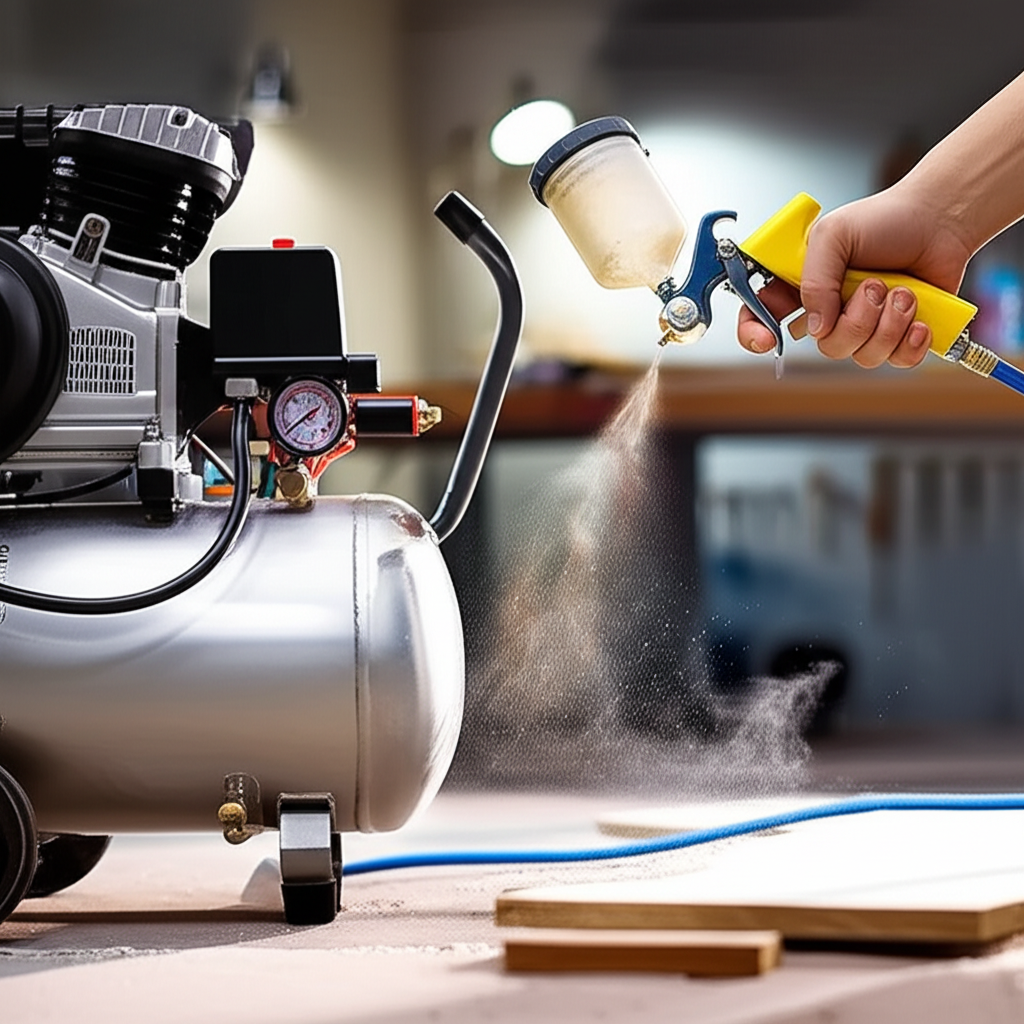
Choosing the right air compressor size is crucial for powering your tools effectively and avoiding frustration. For most DIYers and homeowners, a 1-2 horsepower (HP) compressor with a 10-20 gallon tank and 4-6 CFM is a great starting point. This guide will help you find the perfect fit for your needs.
Feeling a bit overwhelmed by all the air compressor options out there? You’re not alone! It’s a common question for anyone looking to dive into DIY projects, spruce up their car, or tackle some home maintenance. Picking the wrong size can mean your tools sputter, your paint job looks patchy, or you end up with an unnecessarily large and loud machine. But don’t worry, we’re going to break it down simply. Think of me as your friendly guide, helping you navigate the world of CFM, PSI, and gallons so you can confidently choose the air compressor that’s just right for you. Let’s get started on making sure your tools have the power they need!
Understanding Air Compressor Basics: CFM, PSI, and Tank Size
Before we get into sizing, let’s quickly cover the essential terms you’ll see on every air compressor. Knowing these will make choosing the right one much easier.
- CFM (Cubic Feet per Minute): This is arguably the most important factor. CFM measures the volume of air the compressor can deliver at a specific pressure. Think of it as the “horsepower” of the air. The higher the CFM, the more air your tools get, and the longer they can run without interruption.
- PSI (Pounds per Square Inch): PSI measures the pressure of the air. Most air tools operate within a specific PSI range. Your compressor needs to be able to deliver the required PSI for your tools to function correctly.
- Tank Size (Gallons): The tank acts as a reservoir for compressed air. A larger tank means the compressor motor will run less often, providing a more consistent air supply and reducing noise. It’s great for tools that use a lot of air intermittently.
- Horsepower (HP): While often advertised, HP is less critical than CFM. A higher HP motor generally helps achieve higher CFM and PSI, but a poorly designed motor might have high HP but low CFM.
How to Determine the Air Compressor Size You Need
The best way to figure out what size air compressor you need is to look at the tools you plan to use. Each tool has specific air requirements, usually listed in CFM and PSI.
Step 1: List Your Air Tools
Start by making a list of all the air tools you own or plan to buy. Common DIY tools include:
- Tire Inflators
- Brad Nailers
- Staplers
- Impact Wrenches
- Orbital Sanders
- Spray Guns (for painting)
- Air Hammers
- Die Grinders
Step 2: Find the CFM and PSI Requirements for Each Tool
You can usually find this information in the tool’s manual, on the manufacturer’s website, or sometimes directly on the tool itself. Pay close attention to the CFM rating at a specific PSI. For example, a tool might require 5 CFM at 90 PSI.
Important Note: Always look for the CFM rating at 90 PSI. This is the standard measurement used across the industry, making comparisons easier.
Step 3: Calculate Your Total CFM Needs
To ensure your compressor can handle all your tools, you need to consider the tool that uses the most air. You also need to add a buffer for efficiency and future use. A good rule of thumb is to add 30-50% to the CFM requirement of your most demanding tool.
Example: If your most air-hungry tool is an orbital sander that requires 7 CFM at 90 PSI, you should look for a compressor that can deliver at least 9.1 CFM (7 CFM * 1.30) at 90 PSI.
Step 4: Consider the Duty Cycle
Air compressors have a duty cycle, which is the percentage of time they can run continuously without overheating. A 50% duty cycle means the compressor can run for 5 minutes out of every 10 minutes. For most DIY tasks, a compressor with a 50% or higher duty cycle is sufficient. If you plan on very heavy, continuous use, you might need a higher duty cycle or a larger compressor.
Air Compressor Sizes for Common DIY Tasks
Let’s break down common needs and the typical compressor sizes that would work well. Remember, these are general guidelines, and checking your specific tool’s requirements is always best.
| Task/Tool | Typical CFM @ 90 PSI | Recommended Compressor Size (HP/Tank) | Notes |
|---|---|---|---|
| Inflating Tires, Ballons, Air Mattresses | 0.3 – 1 CFM | Portable (1-6 Gallon Tank), 0.5 – 1 HP | Small, lightweight compressors are perfect. |
| Brad Nailers, Staplers, Finish Nailers | 0.5 – 2 CFM | Portable (2-10 Gallon Tank), 1 – 1.5 HP | Can often share a compressor. |
| Impact Wrenches, Ratchets | 3 – 6 CFM | 15-30 Gallon Tank, 1.5 – 2 HP | Requires more consistent airflow. |
| Orbital Sanders, Grinders, Paint Sprayers (HVLP) | 5 – 10+ CFM | 30-60+ Gallon Tank, 2+ HP | Demand higher CFM for continuous operation. |
| Air Hammers, Sandblasters | 10+ CFM | 60+ Gallon Tank, 3+ HP (often 2-stage) | Heavy-duty applications requiring substantial airflow. |
As you can see, the CFM requirement is the key driver. A compressor that’s too small will struggle to keep up, leading to tool performance issues and potential damage.
Types of Air Compressors and Their Suitability
Beyond size, compressors come in different types, each suited for different environments and tasks.
1. Portable Compressors
- Features: Small, lightweight, often with wheels. Usually have smaller tanks (1-20 gallons).
- Best For: Home use, inflating tires, powering brad nailers and staplers, light automotive tasks.
- Pros: Easy to move, affordable, compact.
- Cons: Lower CFM output, smaller tanks, can be noisy, not ideal for continuous high-demand tools.
2. Stationary/Workshop Compressors
- Features: Larger, heavier, designed to stay in one place. Tanks range from 20 gallons to over 100 gallons.
- Best For: Garages, workshops, professional use, running multiple tools, continuous operation.
- Pros: Higher CFM output, larger tanks, quieter operation (often), more durable for heavy use.
- Cons: Less portable, more expensive, require more space and a dedicated power source (often 240V).
3. Oil-Lubricated vs. Oil-Free Compressors
- Oil-Lubricated: These compressors use oil to lubricate the pump. They tend to be quieter, run cooler, and last longer, making them ideal for workshop use. However, they require regular oil changes and maintenance.
- Oil-Free: These compressors are lighter, maintenance-free (no oil changes), and produce cleaner air, which is good for painting and some delicate tools. They can be louder and may have a shorter lifespan than oil-lubed counterparts.
For most DIYers, an oil-lubricated, portable compressor with a 10-20 gallon tank and 1.5-2 HP is a versatile choice. If you’re serious about painting or need very clean air, an oil-free model might be better.
Key Considerations When Buying
When you’re ready to make a purchase, keep these points in mind:
- Power Source: Most portable compressors run on standard 120V household power. Larger stationary units often require 240V, which might necessitate an electrician for installation.
- Noise Level: Compressors can be loud. Look for decibel (dB) ratings if noise is a concern, especially if you’re working in a residential area or a shared garage. Some are specifically designed for quieter operation.
- Portability: If you need to move the compressor around your yard or to different job sites, look for models with sturdy wheels and comfortable handles.
- Durability and Brand Reputation: Invest in a reputable brand known for quality and customer support. Reading reviews can give you insights into long-term reliability.
- Future Needs: Think about tools you might want to buy in the future. It’s often better to buy a compressor that’s slightly larger than you need now to accommodate future projects.
Maintaining Your Air Compressor for Longevity
Proper maintenance is key to ensuring your air compressor lasts and performs optimally. Here are a few essential tips:
- Drain the Tank Regularly: Water condensation builds up in the tank. Drain it after each use to prevent rust and corrosion. Most compressors have a drain valve at the bottom of the tank.
- Check and Clean the Air Filter: A clogged filter restricts airflow, reducing efficiency. Clean or replace it according to the manufacturer’s recommendations. You can find guides on cleaning or replacing air filters for various models online.
- Monitor Oil Levels (for oil-lubricated models): Check the oil level regularly and top it up or change it as needed. Using the correct type of oil is crucial. Consult your manual for the recommended oil type.
- Inspect Hoses and Fittings: Look for leaks or damage in air hoses and connections. Leaks waste air and reduce pressure.
- Keep it Clean: Dust and debris can clog vents and cause the motor to overheat. Keep the compressor clean and in a well-ventilated area.
For more in-depth maintenance guides, resources like Popular Mechanics offer excellent practical advice.
Frequently Asked Questions (FAQ)
What is the minimum CFM I need for basic tasks?
For very light tasks like inflating tires or powering a small brad nailer, a compressor with at least 2-3 CFM at 90 PSI is usually sufficient.
Can I use a small air compressor for painting?
Yes, but only for very small touch-up jobs or for airbrushing. For anything more substantial, like painting a car or furniture, you’ll need a compressor with a higher CFM output (around 5-10 CFM at 90 PSI) and a larger tank to ensure a consistent, smooth finish.
How much CFM does an impact wrench need?
Most common impact wrenches require between 3 to 6 CFM at 90 PSI. Always check your specific impact wrench’s manual for its exact requirements.
Is a 6-gallon air compressor enough for DIYers?
A 6-gallon compressor is great for very light tasks, inflating tires, and powering brad nailers or staple guns. If you plan to use tools that require more air, like impact wrenches or sanders, you’ll likely find it insufficient for continuous use.
What’s the difference between a 1-stage and 2-stage compressor?
A 1-stage compressor compresses air in one step. A 2-stage compressor compresses air, cools it, and then compresses it again. This makes 2-stage compressors more efficient, cooler running, and better suited for continuous heavy-duty use, often found in larger workshop models.
Do I need a special outlet for an air compressor?
Portable compressors that run on 120V typically plug into a standard household outlet. Larger stationary compressors, especially those requiring 240V, will need a dedicated 240V outlet, similar to what an electric dryer or stove might use.
How important is the tank size?
Tank size is important for tools that use air intermittently or in bursts. A larger tank stores more compressed air, meaning the motor runs less often. This provides a more consistent air supply and reduces overall noise and wear on the motor. For continuous-use tools, CFM is more critical.
Conclusion: Powering Your Projects with Confidence
Choosing the right air compressor size doesn’t have to be a guessing game. By understanding the needs of your tools – specifically their CFM and PSI requirements – and considering how you’ll use the compressor, you can make a confident decision. For most homeowners and DIY enthusiasts, a portable compressor with a 1-2 HP motor, a 10-20 gallon tank, and an output of around 4-6 CFM at 90 PSI will serve a wide range of tasks exceptionally well, from inflating tires and powering nail guns to light automotive work. Remember to factor in your future tool aspirations and always prioritize regular maintenance to keep your air compressor running smoothly for years to come. Now go forth and power up your projects with the perfect amount of air!
