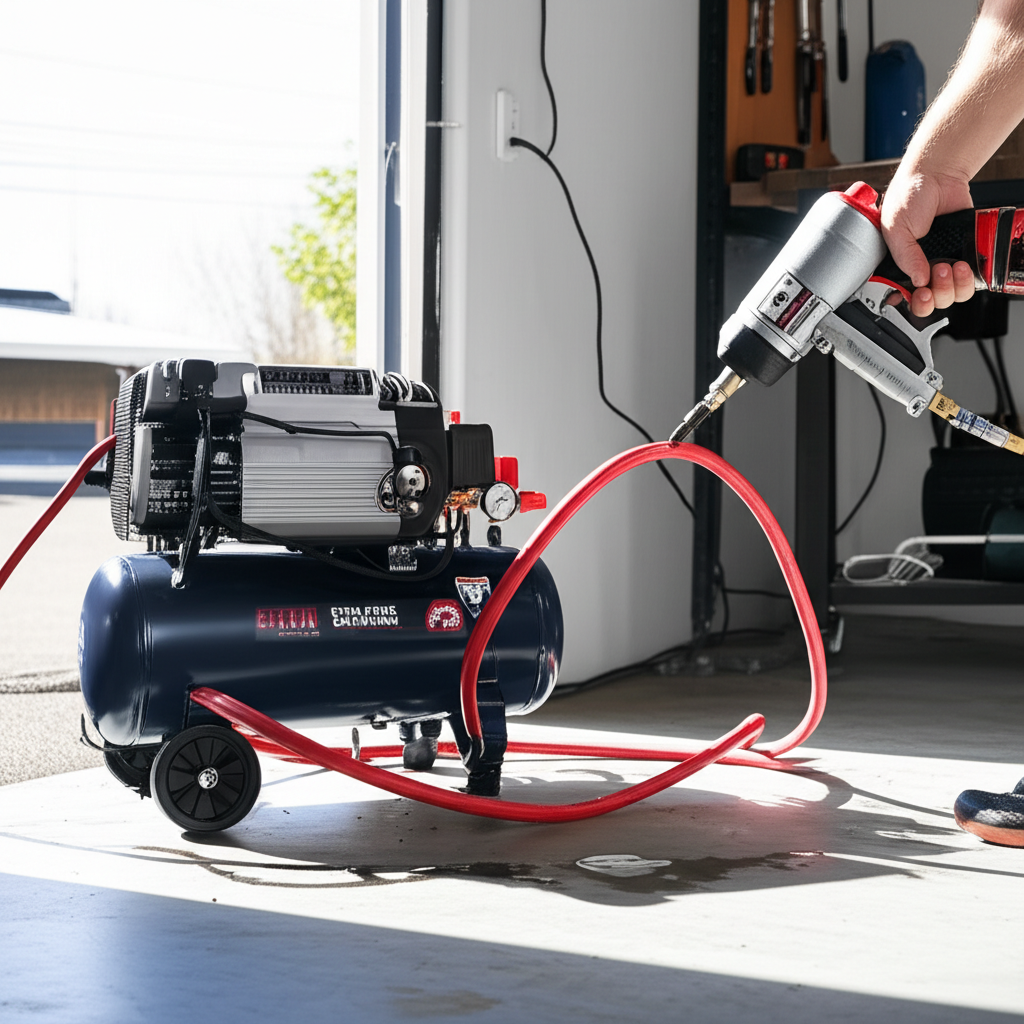
Are Air Compressor Fittings Universal? No, not all air compressor fittings are universal. While common standards exist, variations in size, thread type, and pressure ratings mean you can’t assume any fitting will work with any compressor or tool. This guide will help you identify the right fittings to avoid leaks and ensure safe operation.
Hey there! If you’ve ever tried to connect an air tool to your compressor and found yourself staring at a fitting that just won’t screw in, you’re not alone. It’s a common frustration for anyone starting out with air compressors, whether you’re inflating tires, running a nail gun, or just doing some basic garage maintenance. The good news is, it’s usually a simple fix once you know what to look for. We’re going to break down the confusing world of air compressor fittings so you can confidently connect your tools and get your projects done right. Let’s dive in!
Understanding Air Compressor Fittings: The Basics
Air compressor fittings, also known as couplings and connectors, are the essential pieces that link your air compressor’s hose to your air tools. Think of them as the handshake between your air source and your work. Without the right handshake, nothing gets done! The confusion often arises because there isn’t just one single type of fitting used everywhere. Different manufacturers and different applications have led to a variety of standards.
The primary job of an air fitting is to create a secure, leak-free connection that can handle the pressure of compressed air. When fittings don’t match, you’ll likely experience air leaks, which means your compressor has to work harder, uses more electricity, and your tools won’t perform at their best. Worse, a poorly matched fitting could potentially lead to a dangerous failure under pressure.
Why Aren’t All Air Compressor Fittings Universal?
The main reason for the lack of universal fittings boils down to history, industry standards, and specific application needs. Over time, different regions and industries developed their own preferred ways of connecting pneumatic (air-powered) equipment. This resulted in several common standards, but also many less common ones.
Here are some key factors contributing to this:
- Thread Standards: Threads on fittings can differ in size (diameter) and pitch (how many threads per inch). Common thread types include NPT (National Pipe Taper) and BSP (British Standard Pipe), which are not interchangeable.
- Coupler Styles: The part of the fitting that connects to the hose often has different designs. Some are designed for quick-connect, while others might be more robust for higher-pressure industrial use.
- Pressure Ratings: Fittings are designed to handle specific air pressures. Using a fitting rated for lower pressure with a high-pressure system can be a safety hazard.
- Flow Rate: Some fittings are designed to allow more air to pass through them, which is important for tools that require a high volume of air, like impact wrenches or sanders.
Common Air Compressor Fitting Types
To help you navigate this, let’s look at the most common types of fittings you’ll encounter. Knowing these will be your superpower when shopping for new parts.
1. Industrial Interchange (I/I) Couplers
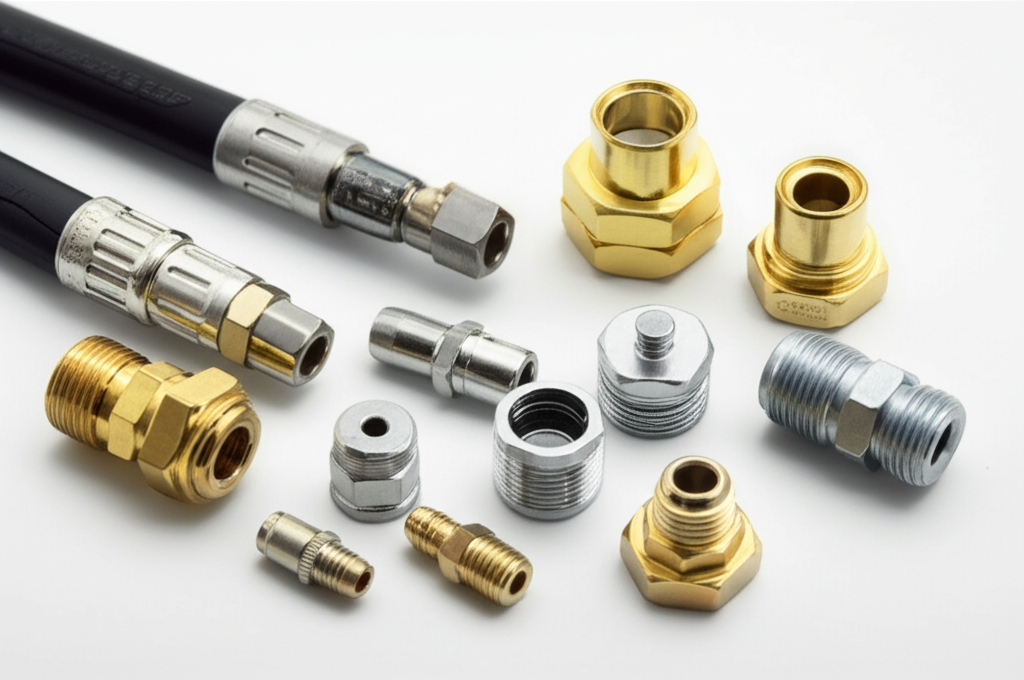
These are very common in North America and are often what people think of when they say “air compressor fittings.” They are designed for quick connect/disconnect and are built to be durable. They typically have a sleeve that you pull back to connect or disconnect.
- Pros: Widely available, durable, easy to use.
- Cons: Can sometimes have slightly lower airflow than other types.
- Common Sizes: 1/4″, 3/8″, and 1/2″ nominal pipe size (NPS) for the hose connection.
2. Automotive Interchange (A/I) Couplers
Similar in function to Industrial Interchange, but often smaller and less robust. These are frequently found on smaller compressors and portable air tools. They might also be referred to as “manual quick connect” fittings.
- Pros: Compact, suitable for lighter-duty applications.
- Cons: Less durable than I/I, may have lower airflow.
- Common Sizes: Typically 1/4″ NPS.
3. Lincoln/Nitrogen Couplers
These are a specific type of industrial coupler, often seen in automotive repair shops. They are known for their durability and good airflow.
- Pros: Very durable, good airflow.
- Cons: Can be more expensive, less common in general DIY stores.
4. Aro Couplers
Aro fittings are another type of industrial coupler, often found in heavy-duty applications. They are known for their robust construction and ability to handle high pressures and airflows.
- Pros: Extremely durable, excellent airflow, high-pressure capable.
- Cons: Not interchangeable with I/I or A/I, can be harder to find for DIYers.
5. Schrader Valves
You’ll see Schrader valves everywhere! They are the standard for tire valves on cars, bikes, and many other inflatable items. While not a “coupler” in the same sense as the others, the fittings that attach to your air hose to inflate tires use a Schrader valve connection.
- Pros: Ubiquitous for tire inflation.
- Cons: Not suitable for running air tools.
6. BSP Fittings (British Standard Pipe)
These are common outside of North America, particularly in the UK and Europe. There are two main types: BSPP (Parallel) and BSPT (Tapered). It’s crucial to know which one you have, as they are not interchangeable with each other or with NPT.
- Pros: Standard in many parts of the world.
- Cons: Not compatible with NPT fittings.
7. NPT Fittings (National Pipe Taper)
NPT is the standard in the United States for threaded pipes and fittings. The “Taper” in the name means the threads get slightly smaller along the length of the fitting, which helps create a tight seal when screwed in. Most air compressor hoses and tools sold in the US will use NPT threads.
- Pros: Standard in the US, creates a tight seal.
- Cons: Not compatible with BSP fittings.
Identifying Your Current Fittings
This is the most critical step. Before you buy anything, you need to know what you already have. Grab a ruler and a magnifying glass if you need to!
1. Check the Size
Fittings are usually identified by their nominal pipe size (NPS). Common sizes for air compressors are 1/4″, 3/8″, and 1/2″. This refers to the approximate inside diameter of the pipe the fitting is designed for, not the actual measurement of the fitting itself. You’ll often see it marked as “1/4 NPT,” “3/8 NPT,” etc.
2. Examine the Threads (NPT vs. BSP)
This is where many mistakes happen. NPT and BSP threads are designed differently and will not seal properly if mixed.
- NPT: The threads are tapered. When you look at an NPT fitting, the threads will appear to get smaller as they go further into the fitting.
- BSP:
- BSPP (Parallel): The threads are straight (parallel). They rely on a washer or O-ring for sealing.
- BSPT (Tapered): The threads are tapered, similar to NPT, but the angle of the taper is different.
Tip: If you have a fitting that looks like it might be BSP, and you’re in North America, it’s almost certainly NPT. If you’re outside North America, or dealing with imported equipment, it’s more likely to be BSP. A quick search for “thread gauge” can help you identify thread pitch if you’re unsure.
3. Look for Markings
Many fittings have manufacturer names or size information stamped on them. Sometimes this is small, so a good light and a bit of cleaning might be necessary.
4. Consider the Coupler Style
Is it a push-to-connect style with a sleeve? Does it have a ball-lock mechanism? Knowing the style helps you match it to the correct connector.
Common Scenarios and Solutions
Let’s walk through some typical situations you might encounter and how to fix them.
Scenario 1: My new air hose doesn’t fit my compressor
Problem: Your compressor has a 1/4″ NPT male thread (often on the tank outlet), but your new hose has a 1/4″ NPT female fitting. They won’t connect.
Solution: You need a 1/4″ NPT male-to-male adapter, or a 1/4″ NPT female coupler to attach to the hose, which will then connect to the compressor’s male fitting. Or, if the hose already has a coupler, you might need a 1/4″ NPT male plug for the compressor outlet that accepts a quick-connect coupler.
Scenario 2: My air tool won’t connect to my hose
Problem: Your air hose has a quick-connect coupler, but the plug on your air tool doesn’t seem to fit.
Solution: This is usually a mismatch in coupler series (e.g., trying to connect an Industrial Interchange plug to an Automotive Interchange coupler). The simplest solution is to replace the plug on your air tool with one that matches your hose’s coupler series. Most hardware stores sell “Industrial Interchange” or “Automotive Interchange” style plugs and couplers.
Scenario 3: I bought a tool from overseas, and it doesn’t fit
Problem: The tool likely has BSP fittings, and your North American compressor setup uses NPT.
Solution: You’ll need to purchase adapters to convert from BSP to NPT. Be very careful to get the correct type (BSPT or BSPP) and size. For example, you might need a 1/4″ BSPT male to 1/4″ NPT female adapter.
Choosing the Right Fittings: A Step-by-Step Guide
Here’s how to ensure you get the correct fittings every time:
- Identify Your Compressor’s Outlet: Look at the port where your main air hose connects to the compressor tank. Note its thread size (e.g., 1/4″, 3/8″) and type (NPT is most common in the US).
- Identify Your Air Hose’s Fittings: Most air hoses come with a female coupler at one end and a male plug at the other, or sometimes both ends have couplers. Determine the thread size and type connecting the hose to the coupler.
- Identify Your Air Tool’s Fittings: Check the inlet port on your air tool. Note the thread size and type.
- Determine the Connection Type Needed:
- If your hose has a coupler and your tool has a plug, you need to ensure they are compatible.
- If you’re connecting directly to the compressor, you need to match the compressor’s outlet thread.
- Purchase Compatible Fittings: Buy fittings that match the thread size and type for your compressor and tools. For quick-connect systems, ensure the coupler on the hose and the plug on the tool are from the same series (e.g., Industrial Interchange).
- Consider Adapters if Necessary: If you have mismatched systems (e.g., NPT compressor to BSP tool), purchase the appropriate adapters.
Fitting Material and Durability
Fittings come in various materials, each with its own pros and cons:
| Material | Pros | Cons | Best For |
|---|---|---|---|
| Brass | Corrosion-resistant, relatively inexpensive, good for general use. | Can be softer, may wear out faster under heavy use. | Home garages, DIY projects, light-duty tools. |
| Steel (Plated) | Strong, durable, good resistance to wear and tear. | Can rust if plating is damaged, heavier than brass. | Industrial applications, heavy-duty tools, frequent use. |
| Stainless Steel | Excellent corrosion resistance, very durable, good for harsh environments. | More expensive, can be heavier. | Corrosive environments, high-pressure applications where longevity is key. |
For most home and DIY use, brass fittings are perfectly adequate and cost-effective. If you’re running high-demand tools frequently or in a demanding environment, steel or stainless steel might be a better investment.
Airflow Considerations: Don’t Choke Your Tools!
Beyond just matching threads, the size of your fittings and hoses can significantly impact the performance of your air tools. This is measured in CFM (Cubic Feet per Minute) and PSI (Pounds per Square Inch).
- Larger Fittings = More Airflow: Fittings with larger internal diameters (like 3/8″ or 1/2″ instead of 1/4″) allow more air to pass through. This is crucial for tools that consume a lot of air, such as impact wrenches, sanders, or large spray guns.
- Coupler Series Impact: Some coupler series are designed for higher airflow. Industrial Interchange couplers generally offer better airflow than Automotive Interchange couplers.
- Hose Diameter Matters Too: A narrow hose connected to a high-CFM tool will restrict airflow, even if the fittings are correct. Ensure your hose diameter is appropriate for your tools. You can learn more about CFM requirements from tool manufacturers or resources like OSHA’s regulations on pneumatic tools, which outline safety and operational standards.
If your tools feel weak or don’t operate at their full potential, check if your fittings or hoses are undersized for the tool’s air requirements.
Maintaining Your Fittings
Proper maintenance ensures your fittings last longer and work reliably:
- Keep them Clean: Dirt and debris can interfere with the sealing mechanism of quick-connect couplers and clog threads. Wipe them down regularly.
- Inspect for Damage: Look for bent threads, cracked sleeves, or worn-out O-rings. Damaged fittings should be replaced immediately.
- Use Thread Sealant (for threaded fittings): For NPT and BSPT fittings, use Teflon tape or pipe dope on the male threads to ensure a leak-free seal. Apply it in the direction of the threads.
- Lubricate Moving Parts (sparingly): A tiny drop of pneumatic tool oil on the coupler sleeve can help it move smoothly, but avoid over-lubrication, which can attract dirt.
FAQ: Your Air Compressor Fitting Questions Answered
Q1: Can I use an NPT fitting on a BSP thread?
A1: No, you should not. While they look similar, the thread angles are different. Forcing them together can damage both the fitting and the threads, and they will not create a proper seal, leading to leaks.
Q2: What’s the difference between a coupler and a plug?
A2: A coupler is typically the part that stays on the air hose and has a sleeve you pull back. A plug is the part that attaches to the air tool and inserts into the coupler. Most air hoses have a coupler on one end and a plug on the other, or two couplers.
Q3: My compressor has a 1/4″ NPT outlet. What kind of fitting do I need for my hose?
A3: You’ll need a fitting with a 1/4″ NPT female thread to screw onto your compressor’s outlet. This will likely be a plug or a coupler that you then connect your air hose to.
Q4: How do I know if my fittings are Industrial Interchange or Automotive Interchange?
A4: Industrial Interchange (I/I) fittings are generally larger and more robust. Automotive Interchange (A/I) fittings are often smaller and lighter-duty. If you have both types, you’ll usually be able to see the size difference. When buying, look for

Samuel H. Murphy is DIY expert and Interior Designer. He is also a part time content writer of Capische. He lives in Warren city, Michigan. He test tools like drill, saw, sander, air compressor etc and helps readers to find out the best tools.