Can a coping saw cut curves? Absolutely! With the right technique and a few simple tips, you can effortlessly cut smooth, precise curves in wood, trim, and other materials using your coping saw.
Ever stared at a piece of wood, a beautiful curve in mind, and felt a pang of dread thinking about how to actually cut it? You’re not alone. Many DIYers and beginners find cutting curves with a coping saw a bit daunting. It can seem like the saw has a mind of its own, veering off course or leaving a ragged edge. But what if I told you it doesn’t have to be that way? With a little understanding and practice, your coping saw can become your best friend for intricate cuts. We’ll walk through it step-by-step, making those tricky curves feel surprisingly easy.
Why Your Coping Saw is Perfect for Curves
The coping saw, with its slender blade held in a U-shaped frame, is uniquely designed for making curved cuts. Unlike a handsaw or a jigsaw, its narrow blade can twist and turn, allowing you to follow intricate patterns. This makes it ideal for tasks like cutting out decorative shapes, fitting molding around corners (the very origin of its name!), or creating unique joinery.
Choosing the Right Blade: The Foundation of Effortless Curves
Before you even pick up the saw, the blade is your most important decision. Think of it like choosing the right brush for a painting – the wrong one makes the job much harder.
Blade Tooth Count (TPI)
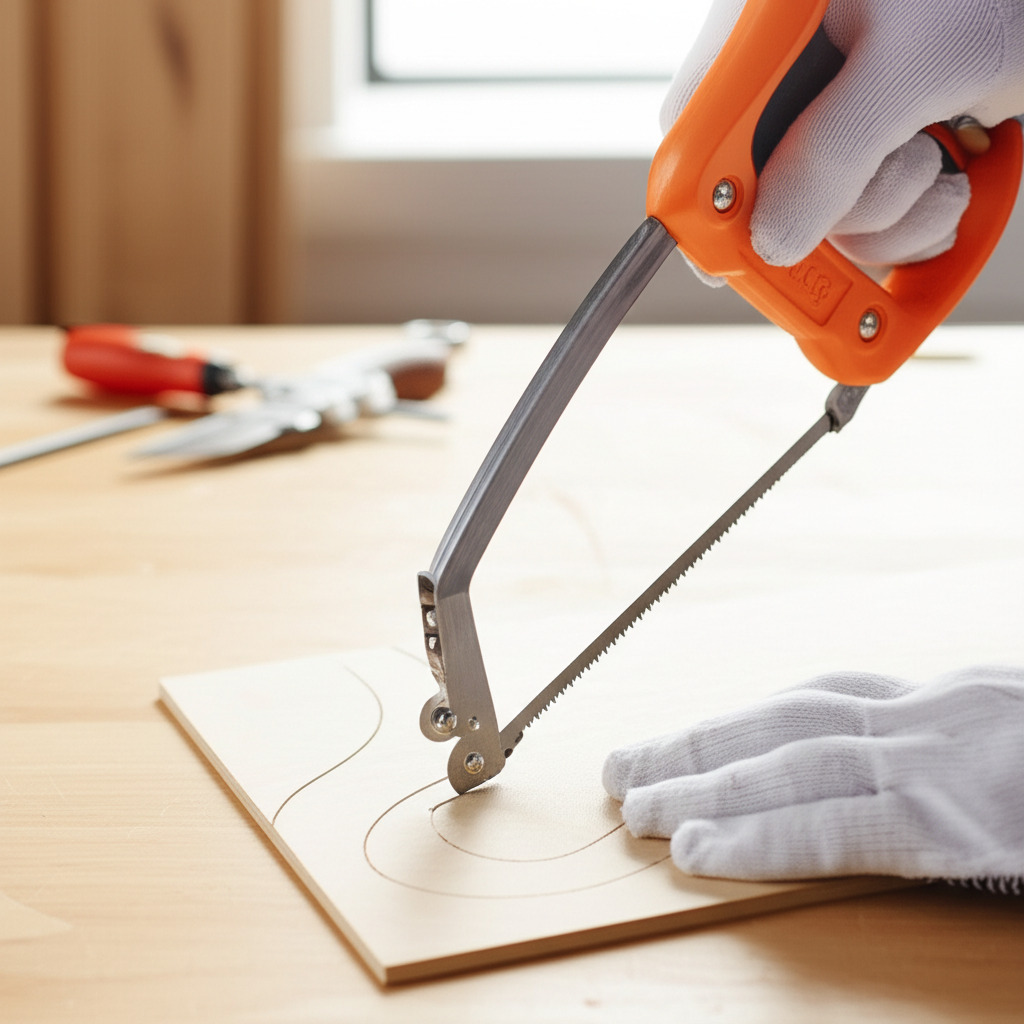
The number of teeth per inch (TPI) on your coping saw blade dictates how clean and fast your cut will be.
High TPI (e.g., 18-32 TPI): These blades have more teeth packed closely together. They produce a very smooth, clean cut, perfect for hardwoods, veneers, and fine detail work. They cut slower but offer superior finish.
Low TPI (e.g., 10-14 TPI): These blades have fewer, larger teeth. They cut faster but will leave a rougher edge, making them better suited for softer woods or when speed is more important than a pristine finish.
For general curve cutting on common materials like pine or MDF, a blade in the 14-20 TPI range is a great all-around choice.
Blade Width
Coping saw blades come in different widths. Narrower blades are more flexible and can navigate tighter curves, while wider blades offer more rigidity for straighter sections within a curve. For most beginner curve cutting, a standard width blade is perfectly adequate.
Blade Material
Carbon Steel: These are the most common and affordable. They work well for general purposes but can dull faster.
High-Speed Steel (HSS): These blades are harder and stay sharp longer, especially when cutting tougher materials or if you’re doing a lot of work. They are a bit more expensive but can be worth it.
Pro Tip: Always keep a few different TPI blades on hand. You’ll find that switching blades for different tasks makes a world of difference.
Setting Up Your Coping Saw for Success
Once you have your blade, it’s time to get the saw ready.
Tensioning the Blade
This is crucial! A properly tensioned blade will cut straight and true. Too loose, and it will wander and break easily. Too tight, and it can also snap.
1. Insert the Blade: Place the blade teeth pointing away from you (towards the front of the saw frame).
2. Position the Blade: Fit the pins on the ends of the blade into the slots on the saw frame.
3. Tension: Most coping saws have a handle that you twist to tension the blade. You want the blade to be taut, like a guitar string. When you pluck it, it should make a slight “ping” sound, not a dull thud. A good rule of thumb is to tension it until it’s just before the point where you feel significant resistance when trying to twist the blade sideways with your finger.
External Resource: For a visual guide on blade tensioning, check out this helpful article from Popular Mechanics.
Blade Direction
Remember, the teeth should always point away from the handle, towards the front of the saw. This ensures the saw cuts on the push stroke, giving you more control.
Mastering the Technique: Cutting Curves Effortlessly
Now for the fun part! Here’s how to make those curves sing.
Step-by-Step Curve Cutting
1. Mark Your Line: Clearly draw your desired curve onto the material. A pencil line is usually sufficient. For very intricate patterns, you might use a stencil or transfer paper.
2. Positioning:
Start Point: Begin your cut just outside the waste side of your line.
Grip: Hold the saw handle firmly but not with a death grip. Your other hand will guide the work.
Blade Angle: Keep the blade as perpendicular to the material as possible. A slight angle is okay, but a steep angle will bind the blade.
3. The Cut:
Push Stroke: Apply gentle, steady pressure on the push stroke. This is where the cutting happens.
Pull Stroke: On the pull stroke, ease up on the pressure and simply guide the saw.
Follow the Line: Let the saw do the work. Guide the material, not the saw. Imagine you are steering a boat with the saw’s frame.
4. Turning:
Small Adjustments: For gentle curves, you might only need to slightly angle the saw.
Sharp Turns: For tighter turns, you’ll need to pivot the entire saw frame. You can often achieve this by slightly tilting the frame and using a controlled rocking motion.
Backing Up: If you find yourself off course or need to reposition for a tighter turn, you can gently back the saw out of the cut. Sometimes, it’s easier to make a series of small, straight cuts that approximate a curve.
5. Maintaining the Cut:
Blade Clearance: As you cut deeper into the material, ensure the frame of the saw doesn’t hit the workpiece. If it does, you might need to remove the piece from the saw and re-insert the blade from a different angle to continue the cut. This is a common technique for cutting tight interior curves.
Blade Binding: If the blade feels like it’s binding or getting stuck, stop. Check your blade tension, your angle, and if the kerf (the width of the cut) is wide enough for the blade to move freely.
Tip: Practice on scrap pieces first! Get a feel for how the blade responds to different pressures and turning angles.
Cutting Interior Curves: A Special Technique
Sometimes you need to cut a curve that’s entirely enclosed within a piece of material, like cutting a circle out of a panel. This requires a clever trick:
1. Drill a Starting Hole: Drill a hole within the waste area of your curve, large enough for the coping saw blade to pass through.
2. Remove the Blade: Loosen the blade tension on your coping saw and unhook one end of the blade from the frame.
3. Thread the Blade: Thread the loose end of the blade through the starting hole you drilled.
4. Re-attach and Tension: Re-attach the blade to the frame and tension it properly.
5. Cut the Curve: Now, with the blade inside the material, you can cut your curve from the inside out.
6. Finish: Once the curve is cut, loosen the blade and remove it from the workpiece.
This method is essential for many decorative woodworking projects.
What Materials Can You Cut with a Coping Saw?
The coping saw is surprisingly versatile, but it’s best suited for certain materials.
| Material | Suitability for Curves | Notes |
| :————– | :——————— | :—————————————————————————————————————————————————————– |
| Softwoods | Excellent | Pine, poplar, cedar. Cuts easily with good control. |
| Hardwoods | Good | Oak, maple, cherry. Requires more effort and a sharper, higher TPI blade for clean cuts. |
| Plywood | Good | Can be prone to tear-out on the edges, especially on the exit side. Use a sharp blade and support the waste piece. |
| MDF | Very Good | Cuts cleanly and smoothly. A great material for practicing curves. |
| Thin Plastic | Good | Acrylic, PVC. Use a fine-toothed blade (higher TPI) and go slowly to avoid melting or cracking. |
| Thin Metal | Fair | With specialized metal-cutting coping saw blades, you can cut thin sheet metal (like aluminum or brass). Requires slow, steady strokes and lubrication. |
| Thick Metal | Not Recommended | A coping saw is not designed for thick metal. A hacksaw or power tool is needed. |
| Ceramic/Tile | Not Recommended | Will shatter. Use specialized tools like a tile saw or nippers. |
Important Note: Always check the manufacturer’s recommendations for your specific coping saw blades when attempting to cut materials other than wood. For example, specialized blades exist for cutting metal or plastic. You can find a good selection of blades at reputable hardware stores or online retailers like Lee Valley Tools.
Troubleshooting Common Curve Cutting Issues
Even with the best intentions, you might run into a snag. Here are some common problems and how to fix them:
Blade Breaking:
Cause: Too much tension, too little tension, forcing the cut, or twisting the blade too sharply.
Solution: Check blade tension (not too tight, not too loose). Ensure you’re not forcing the saw. Make wider turns or back up to reposition for tighter turns.
Ragged Edges:
Cause: Dull blade, wrong TPI for the material, or cutting too fast.
Solution: Use a sharp blade. For smooth cuts, use a higher TPI blade. Slow down your cutting speed. Ensure the waste side of the cut is on the side where the teeth are angled away from your line.
Blade Wandering:
Cause: Blade not properly tensioned, or the saw is being twisted too much.
Solution: Increase blade tension slightly. Focus on guiding the material with your free hand rather than forcing the saw. Keep the blade perpendicular to the work.
Frame Hitting the Workpiece:
Cause: Cutting a curve that’s too tight for the frame’s clearance.
Solution: Use the “drill and thread” method for interior curves. For exterior curves, you might need to make relief cuts in the waste material to allow the frame to pass.
Safety First!
Always remember that safety is paramount when using any tool.
Eye Protection: Wear safety glasses at all times. Small wood chips or broken blades can fly.
Secure Your Work: Clamp your workpiece firmly to your workbench or sawhorse. This prevents it from moving and makes cutting much safer and more accurate.
Keep Fingers Clear: Be mindful of where your hands are in relation to the blade.
* Sharp Blades: While sharp blades cut better, they also require more care when handling.
Frequently Asked Questions About Coping Saw Curves
What is the best blade for cutting curves with a coping saw?
For general curve cutting on wood, a blade with a TPI (teeth per inch) between 14 and 20 is usually a good balance of speed and smoothness. For very fine detail or hardwoods, opt for a higher TPI (20-32).
How do I prevent the coping saw blade from breaking?
Ensure the blade is properly tensioned – taut like a guitar string. Avoid forcing the saw, and don’t twist the blade too aggressively. For tight turns, make small adjustments or back out and reposition.
Can I cut curves in plastic with a coping saw?
Yes, you can cut curves in thinner plastics like acrylic or PVC. Use a fine-toothed blade (higher TPI) and cut slowly to prevent melting or cracking. Support the plastic well.
What’s the trick for cutting a curve on the inside of a piece of wood?
You’ll need to drill a hole within the waste area of the curve, large enough for the blade. Then, unhook one end of the blade, thread it through the hole, reattach, and tension it. Cut the curve from the inside out.
How do I get a smooth finish on my curved cuts?
A smooth finish comes from using a sharp blade with a higher TPI, cutting at a steady, moderate pace, and ensuring the blade is properly tensioned. You can also lightly sand the edge after cutting.
My coping saw frame keeps hitting the wood. What should I do?
This usually happens on tight curves. For interior curves, use the drill-and-thread method. For exterior curves, you can make small “relief cuts” in the waste material adjacent to the curve to give the frame more clearance.
Conclusion: Embrace the Curve!
There you have it! Cutting curves with a coping saw doesn’t have to be a mystery. By choosing the right blade, setting your saw up correctly, and practicing these simple techniques, you’ll find yourself confidently tackling intricate shapes. Remember to go slow, let the saw do the work, and don’t be afraid to experiment on scrap wood. The ability to cut beautiful curves opens up a whole new world of possibilities for your projects, from decorative trim to custom furniture. So grab your coping saw, pick a project, and start cutting those curves with newfound ease and enjoyment! You’ve got this.
