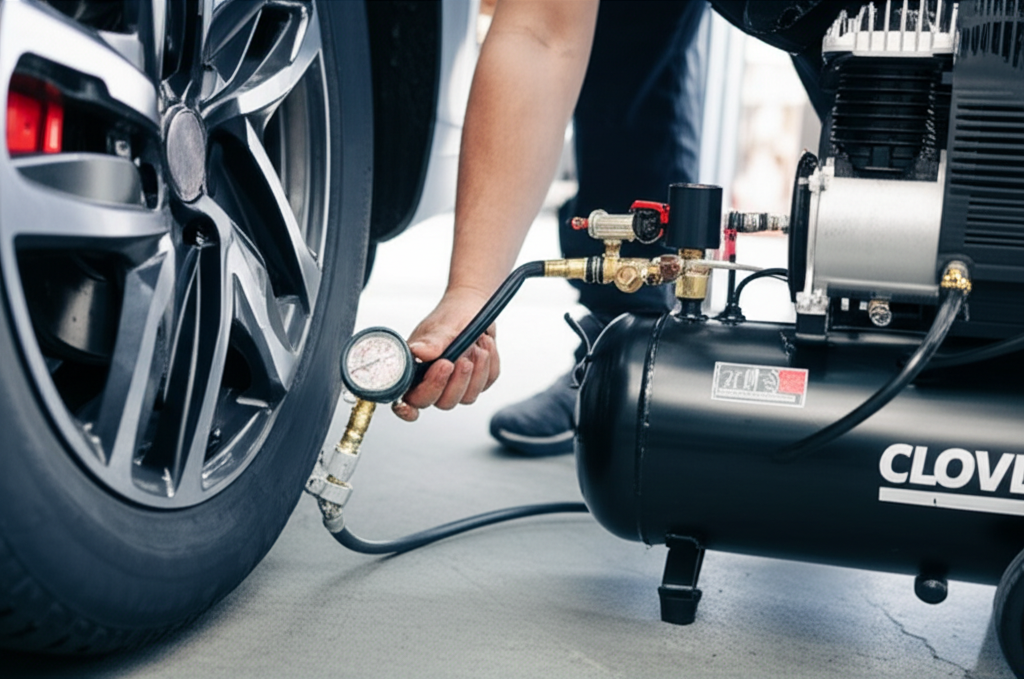
To use an air compressor effectively and safely, ensure it’s properly set up, connected to the right tools, and operated within its limits. This guide will walk you through selecting, connecting, operating, and maintaining your air compressor for a smooth DIY experience.
Have you ever stared at a shiny new air compressor, wondering where to even begin? It’s totally normal! These handy machines can power so many projects, from inflating tires to running nail guns, but getting started can feel a little daunting. Don’t worry, though. We’ll break it all down, step by step, so you can feel confident using your air compressor for all sorts of tasks around the house and garage. Ready to unlock the power of compressed air? Let’s dive in!
Why compressed air?
Compressed air is essentially air that’s been squeezed into a smaller volume. This stored energy can then be released to power a variety of tools. Unlike electric tools that rely on direct power, air-powered tools (pneumatic tools) often offer a better power-to-weight ratio, meaning they can be lighter and more powerful for their size. This makes them ideal for demanding jobs where you need sustained performance.
Think about it:
Power: Air tools can deliver a lot of force, perfect for tasks like hammering nails or driving screws.
Durability: Pneumatic tools often have fewer moving parts than their electric counterparts, which can lead to a longer lifespan.
Safety: In some environments, like those with flammable materials, an air-powered tool can be safer as it doesn’t produce sparks like an electric motor might.
Choosing the Right Air Compressor for Your Needs
Before you can even think about using an air compressor, you need to make sure you have the right one for your projects. This is a crucial step, and picking the wrong compressor can lead to frustration and underperformance.
Key Factors to Consider:
CFM (Cubic Feet per Minute): This is arguably the most important spec. It tells you how much air the compressor can deliver at a certain pressure. Tools have specific CFM requirements, so you need a compressor that can meet or exceed them. Always check the CFM rating of your tools!
PSI (Pounds per Square Inch): This indicates the maximum pressure the compressor can deliver. Most tools operate within a range of 70-100 PSI, but some might require more.
Tank Size (Gallons): A larger tank stores more compressed air, which means the compressor won’t have to cycle as often. For intermittent tasks like inflating tires or using a brad nailer, a smaller tank might be fine. For continuous use, like with an impact wrench or sander, a larger tank is better.
Horsepower (HP): While often advertised, horsepower isn’t as critical as CFM and PSI. It’s more of an indicator of the motor’s power.
Portability: Do you need to move the compressor around your workshop or job site? Look for smaller, wheeled models. If it will stay in one place, a larger stationary unit might be more suitable.
Power Source: Most home compressors run on standard household electricity (120V). Larger, more powerful units might require a 240V outlet.
Common Air Compressor Types for Homeowners and DIYers:
Let’s look at the most common types you’ll encounter:
| Compressor Type | Typical Tank Size | Common Uses | Portability | Noise Level |
| :————– | :—————- | :————————————————— | :———- | :———- |
| Pancake | 1-6 Gallons | Tire inflation, brad nailing, stapling, light cleaning | High | Moderate |
| Hot Dog | 2-30 Gallons | Brad nailing, stapling, air brushing, light impact work | Moderate | Moderate |
| Twin Stack | 20-60 Gallons | Impact wrenches, framing nailers, die grinders | Moderate | Moderate |
| Vertical | 20-80+ Gallons | Automotive repair, framing, heavier woodworking | Low | Moderate |
A good rule of thumb is to choose a compressor with a CFM rating that is at least 1.5 times the CFM requirement of your most demanding tool. This gives you a buffer and ensures the compressor won’t be constantly running to keep up.
Setting Up Your Air Compressor Safely
Safety first, always! Setting up your air compressor correctly is vital to prevent accidents and ensure it functions properly.
Step 1: Choose a Suitable Location
Ventilation: Air compressors generate heat and exhaust air. Place yours in a well-ventilated area, away from flammable materials or dust. Avoid enclosed spaces like small closets without proper airflow.
Stable Surface: Ensure the compressor is placed on a flat, stable surface to prevent vibrations and tipping.
Power Access: Make sure a suitable electrical outlet is nearby. For 120V compressors, a standard grounded outlet is usually sufficient. If you’re using a 240V unit, ensure you have the correct outlet installed by a qualified electrician.
Proximity to Work: Position the compressor reasonably close to where you’ll be using your air tools to minimize the length of air hoses, which can cause pressure drop.
Step 2: Check the Oil Level (for Oil-Lubricated Models)
Many home air compressors are oil-lubricated. These typically run cooler and last longer than oil-free models, but they require oil.
Locate the Oil Cap: It’s usually a dipstick or a fill cap near the pump.
Use the Correct Oil: Consult your compressor’s manual for the recommended type and viscosity of oil. Using the wrong oil can damage the pump.
Fill to the Mark: Add oil until it reaches the indicated fill line. Do not overfill.
Oil-free compressors, often smaller and more portable, do not require this step.
Step 3: Attach the Filter(s)
Inlet Filter: Most compressors come with an air intake filter. Ensure it’s securely attached to the compressor’s intake port. This prevents dust and debris from entering the pump, which can cause wear.
Step 4: Connect the Air Hose
Choose the Right Hose: Use an air hose rated for the pressure your compressor can deliver and the CFM needs of your tools. A hose that’s too restrictive (too small diameter) or not rated for the pressure can be a safety hazard and will reduce tool performance.
Secure Connections: Connect one end of the air hose to the compressor’s outlet port. Most compressors have a quick-connect fitting. Push the coupler on the hose firmly into the fitting. You might hear a click.
Use Thread Seal Tape (PTFE Tape): For threaded fittings (if not using quick-connects), wrap PTFE tape around the male threads to ensure a leak-free seal.
Step 5: Connect Your Air Tool
Tool Requirements: Ensure your air tool is compatible with the compressor’s CFM and PSI output.
Connect to Hose: Connect the other end of the air hose to your air tool’s inlet. Again, quick-connect fittings are common. Ensure a secure connection.
For a visual guide on connecting hoses and fittings, resources like the Occupational Safety and Health Administration (OSHA) offer valuable safety information.
Operating Your Air Compressor
Once everything is set up, operating your compressor is straightforward.
Step 1: Turn on the Compressor
Check the Drain Valve: Before turning it on, ensure the tank drain valve is closed. It’s usually located at the bottom of the tank.
Power Up: Plug the compressor into the outlet and flip the power switch or press the start button.
Listen and Observe: The compressor will start pumping air into the tank. You’ll hear the motor and pump. It will automatically shut off when the tank reaches its maximum pressure.
Step 2: Set the Regulator
Locate the Regulator: Most compressors have a regulator knob, usually near the air outlet.
Adjust for Your Tool: Look at your air tool for its recommended operating pressure (PSI). Turn the regulator knob to match this pressure. For example, if your brad nailer needs 90 PSI, set the regulator to 90 PSI.
Pressure Gauge: Use the pressure gauge on the compressor to set the regulator accurately.
Step 3: Using Your Air Tools
Engage the Tool: Most air tools have a trigger. Squeeze the trigger to operate the tool.
Monitor Pressure: If you’re using a tool that requires continuous airflow, keep an eye on the tank pressure gauge. When the pressure drops too low, the compressor will automatically start up again to refill the tank.
Avoid Over-Pressurizing: Never exceed the maximum PSI rating of your air tool or hose. This can cause damage or dangerous blowouts.
Step 4: Safely Storing Your Air Compressor
Turn Off: Once you’re finished, turn off the compressor’s power switch.
Disconnect Tools: Disconnect your air tool from the hose.
Release Pressure: To relieve pressure in the tank and hose, disconnect the air hose from the compressor. Some compressors have a blow-off valve or you can simply leave tools connected and trigger them until the pressure is gone from the hose.
Drain the Tank: This is a critical maintenance step! Open the drain valve at the bottom of the tank to release any accumulated moisture. Water in the tank can cause rust and corrosion. Let it drain completely.
Store Properly: Store the compressor in a clean, dry place, preferably upright.
Essential Air Compressor Accessories
To get the most out of your air compressor, you’ll want a few accessories.
Air Hoses: Different lengths and diameters are available. A good quality hose is essential for safety and performance.
Couplers and Fittings: Quick-connect couplers make it easy to switch between tools. Various adapters might be needed.
Air Filters: Inline filters can further clean the air supplied to your tools, which is especially important for delicate tasks like painting or airbrushing.
Regulators: While most compressors have built-in regulators, an inline regulator can offer more precise control for specific tools.
Blow Guns: Great for cleaning dust and debris from work surfaces or tools.
Tire Inflators: Essential for automotive use.
A useful resource for understanding air tool requirements can be found on sites dedicated to tool specifications, such as those from reputable tool manufacturers or DIY guides.
Maintenance for Longevity
Proper maintenance is key to ensuring your air compressor runs efficiently and lasts for years.
Regular Maintenance Checklist:
Drain the Tank Daily: As mentioned, always drain moisture from the tank after each use. This is the most important maintenance task!
Check and Clean Air Filters: Inspect the air intake filter regularly. Clean or replace it as needed. Dirty filters restrict airflow and can strain the motor.
Check Oil Level (Oil-Lubricated Models): Verify the oil level before each use.
Change Oil (Oil-Lubricated Models): Consult your manual for the recommended oil change interval. Typically, this is every 500-1000 hours of operation, or annually if used less frequently.
Inspect Hoses and Fittings: Look for cracks, kinks, or damage in the air hose and check fittings for leaks.
Keep it Clean: Wipe down the compressor regularly to keep it free of dust and debris.
For more in-depth maintenance schedules, refer to your specific compressor’s owner’s manual. Many manufacturers provide detailed maintenance guides, similar to what you might find on a U.S. Department of Energy page discussing energy efficiency in industrial systems, which highlights best practices applicable even to smaller units.
Common Air Compressor Problems and How to Fix Them
Even with good maintenance, you might encounter a few issues.
Compressor Won’t Start:
Check Power: Is it plugged in? Is the circuit breaker tripped?
Reset Button: Some compressors have a thermal overload reset button. Check if it needs to be pressed.
Low Voltage: Ensure you have adequate voltage.
Compressor Runs Constantly:
Leaks: Check all connections and hoses for air leaks. A small leak can cause the compressor to run non-stop.
Regulator Issue: The regulator might not be functioning correctly.
Tank Pressure: Is the tank pressure reaching its cut-off point?
Low Air Pressure Output:
Leaks: Again, leaks are a common culprit.
Dirty Filter: A clogged air intake filter restricts airflow.
Tool CFM Too High: Your tool might be demanding more air than the compressor can supply.
Low Tank Pressure: The compressor might not be building enough pressure.
Water in the Air Line:
Not Draining Tank: Ensure you are draining the tank after every use.
High Humidity: In very humid conditions, more moisture can accumulate.
If problems persist, it’s always best to consult your compressor’s manual or contact the manufacturer’s support.
Frequently Asked Questions (FAQ)
- Q1: How long does an air compressor last?
- The lifespan of an air compressor varies greatly depending on its type, quality, usage, and maintenance. A well-maintained, quality compressor might last 10-20 years or more, while a less expensive, frequently-used unit might only last 5-10 years.
- Q2: Can I use any air hose with my compressor?
- No, it’s important to use an air hose that is rated for the maximum pressure your compressor can produce and meets the CFM requirements of your tools. Using an undersized or low-pressure rated hose is a safety hazard.
- Q3: Do I need to oil my air compressor?
- It depends on the type. Oil-lubricated compressors require regular oil checks and changes. Oil-free compressors do not need oil, making them lower maintenance but potentially louder and with a shorter lifespan.
- Q4: What does CFM mean for air tools?
- CFM (Cubic Feet per Minute) is the volume of air a tool consumes per minute. Your air compressor must be able to supply at least the CFM your tool requires, preferably with a buffer, to operate effectively.
- Q5: How often should I drain the air compressor tank?
- You should drain moisture from the air compressor tank after every single use. This prevents rust and corrosion inside the tank, which can damage the compressor over time.
- Q6: Can I use a long extension cord with my air compressor?
- It’s best to avoid long or undersized extension cords. They can cause a voltage drop, leading to the motor overheating or not performing at its best. If you must use one, ensure it’s a heavy-gauge cord suitable for the compressor’s amperage draw and no longer than necessary.
Conclusion
Using an air compressor might seem complex at first, but by following these steps and understanding the basics of setup, operation, and maintenance, you’ll be a pro in no time. Remember to always prioritize safety, choose the right compressor and accessories for your needs, and perform regular maintenance, especially draining that tank! With a little care, your air compressor will be a reliable workhorse for countless projects, making your DIY endeavors easier and more enjoyable. Happy compressing!
